


For my paid subscribers, much of this intro is likely going to reiterate what I said in this past weekends WWW earnings preview.
While Happy Belly is up over 1300% from the 2023 annual pick, the stock is down 15% over the past year. It is down a similar amount from my first ever downgrade of the stock after their annuals back in April and well over a third off of their ATH from mid December.
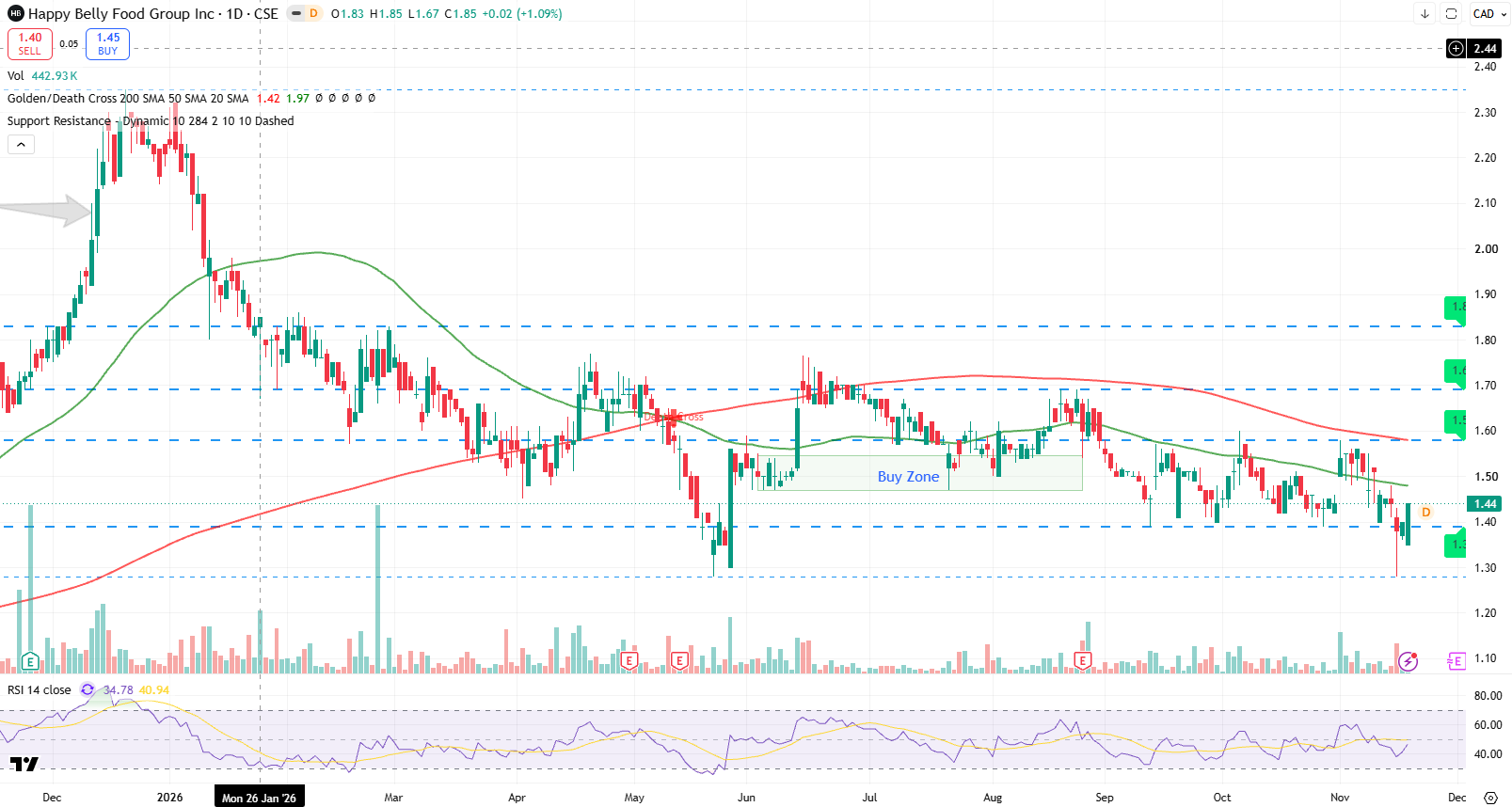
These declines have come at the same time as incredible growth and consistent, rarely seen insider buying - everything a shareholder loves to witness.
In this past article, I attempted to rationalize those valuation declines and my own downgrade to a few factors.
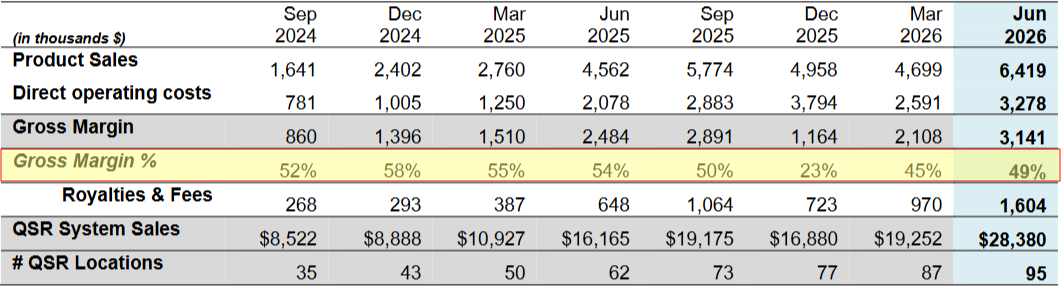
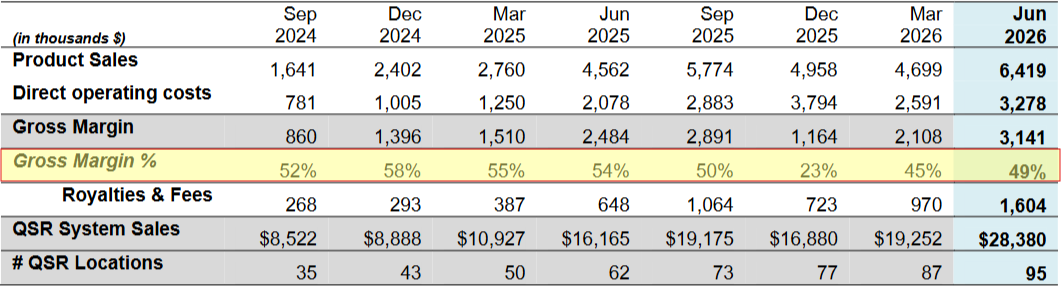
The first was inconsistent and overall declining margin. Prior to the comparable quarter here from last year, Happy Belly produced consistent margins of 50% or more with the past three slipping under that mark including their disastrous number in Q4 of last year.
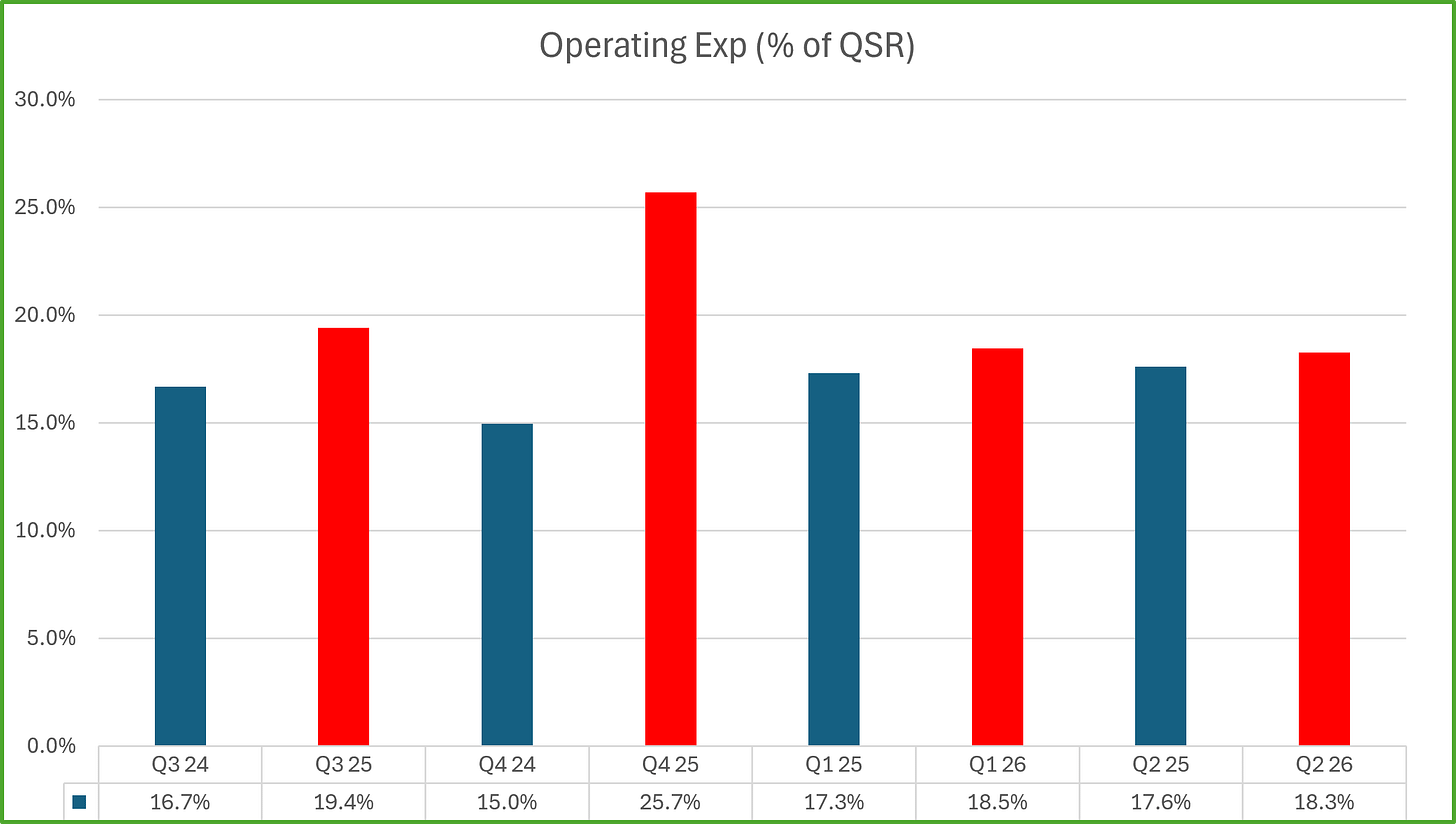
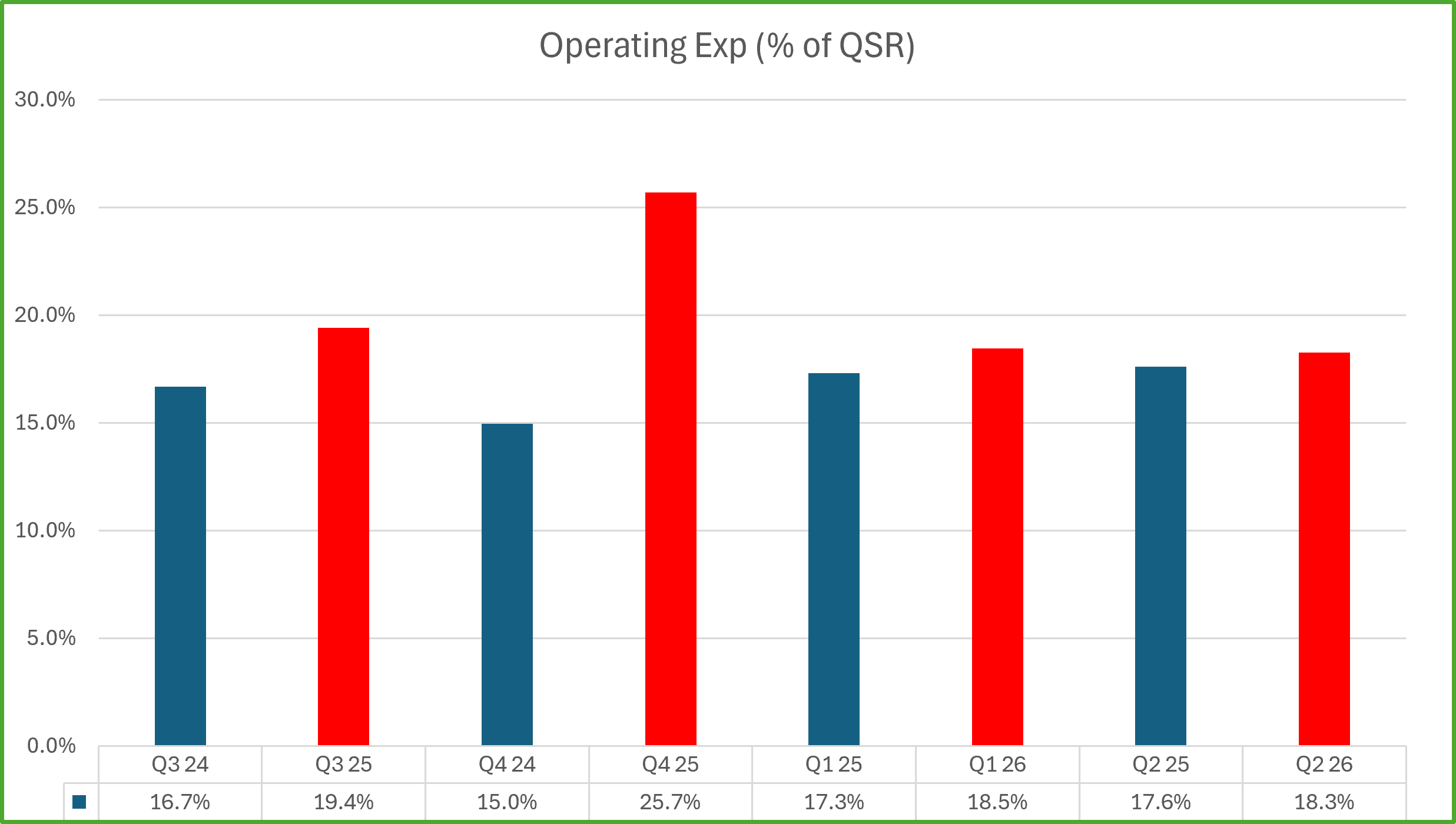
Lack of operating leverage. Each of the past four quarters have seen their operating expenses outpace their QSR revenue growth. When parsing out just their cash burning G&A and payroll, they have risen by 270 basis points, 1070 bps, 120 bps, and 70 bps respectively.
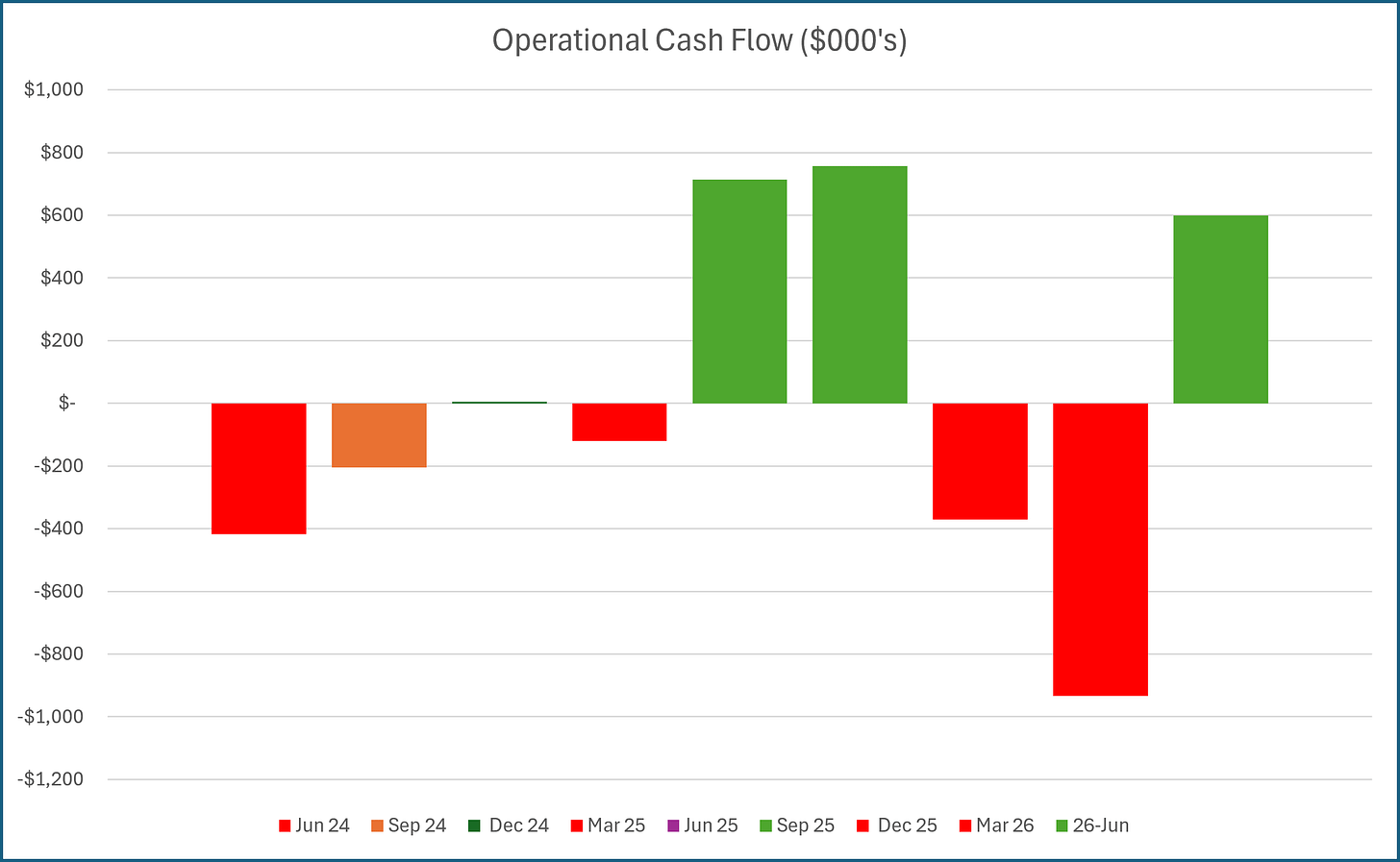
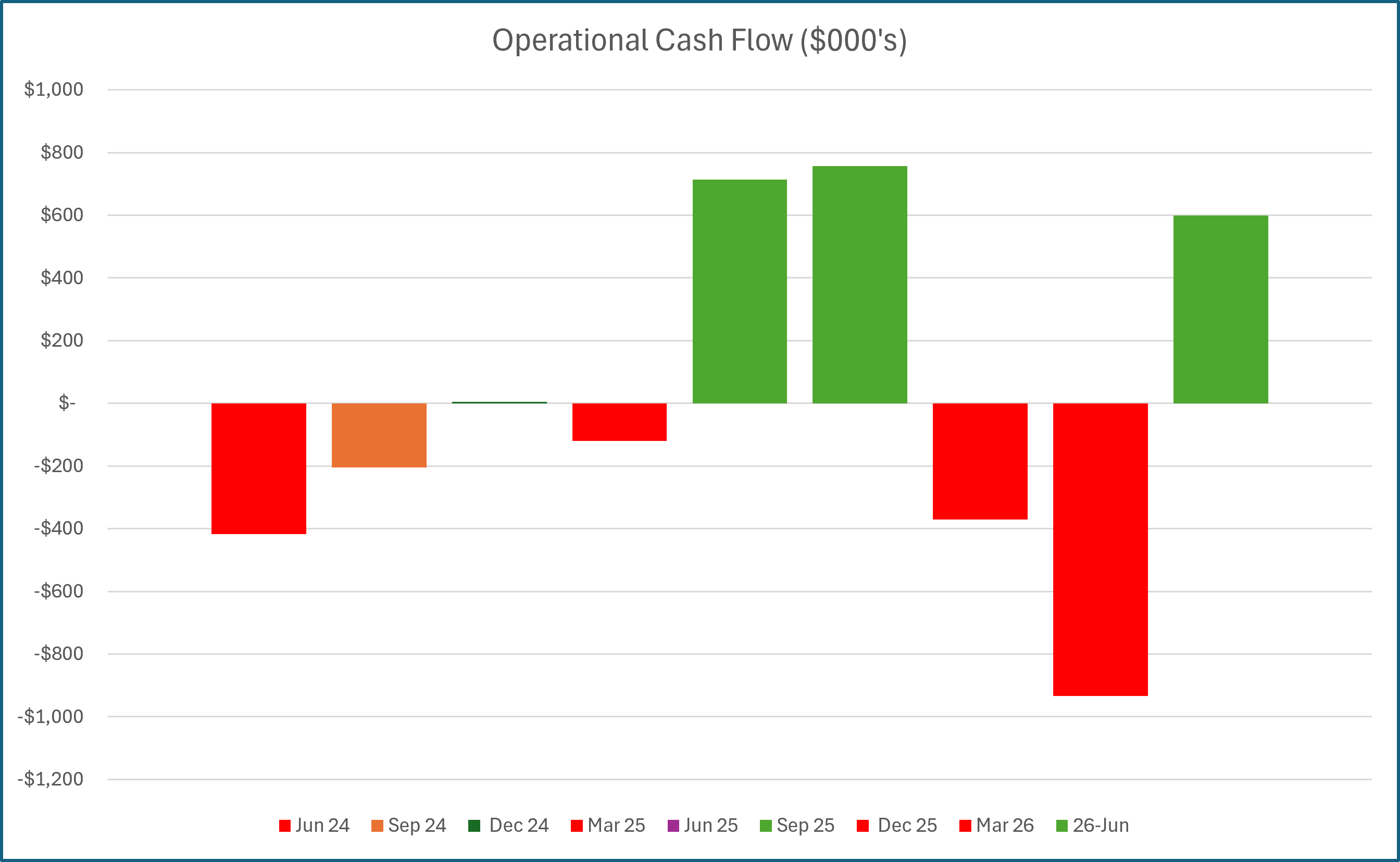
Combined these two factors have had a negative impact on their operational cash flows, with the last three quarters down from their comparables. Given the seasonal softness of their Q4 and Q1, the company needs to offset that in their strongest quarters - something they did not do when they reported Q2.
The float has also been a factor, diluting shareholders by 24% in just the first six months of the year. While the significant incentives were well known to retail investors for the share price eclipsing $2, it has come at some cost. While shareholders are down 35% from January 1st, the market cap itself is just off 19%.
Lastly is just the fact that this is a very difficult company for the market to properly value. Ask 100 different investors their opinion of what the company is worth, and you’re likely to get 100 very different answers. Base it on pure fundamentals and the argument is quite easy that the stock can be viewed as overvalued. Project their growth trajectory, and their current valuation with upside is more justifiable. The question is how much of a premium for future potential does one want to pay for today.
You may have noticed on the chart that I had a long Buy Zone leading into their Q2 financials, one that clearly did not work out as the share price sits 4% below the bottom of that zone currently. While revenues were up 87% last quarter, they didn’t do enough elsewhere to justify a better price to the market.
Factor in a weak looking chart and a microcap picture that has quite frankly sucked over the past two months and I felt these were some very important financials. Aside from the metrics I’ve outlined that haven’t been trending well, these will be the last set of financials the market will see for five months - Q3 is always very bad timing to shit the bed in microcaps.
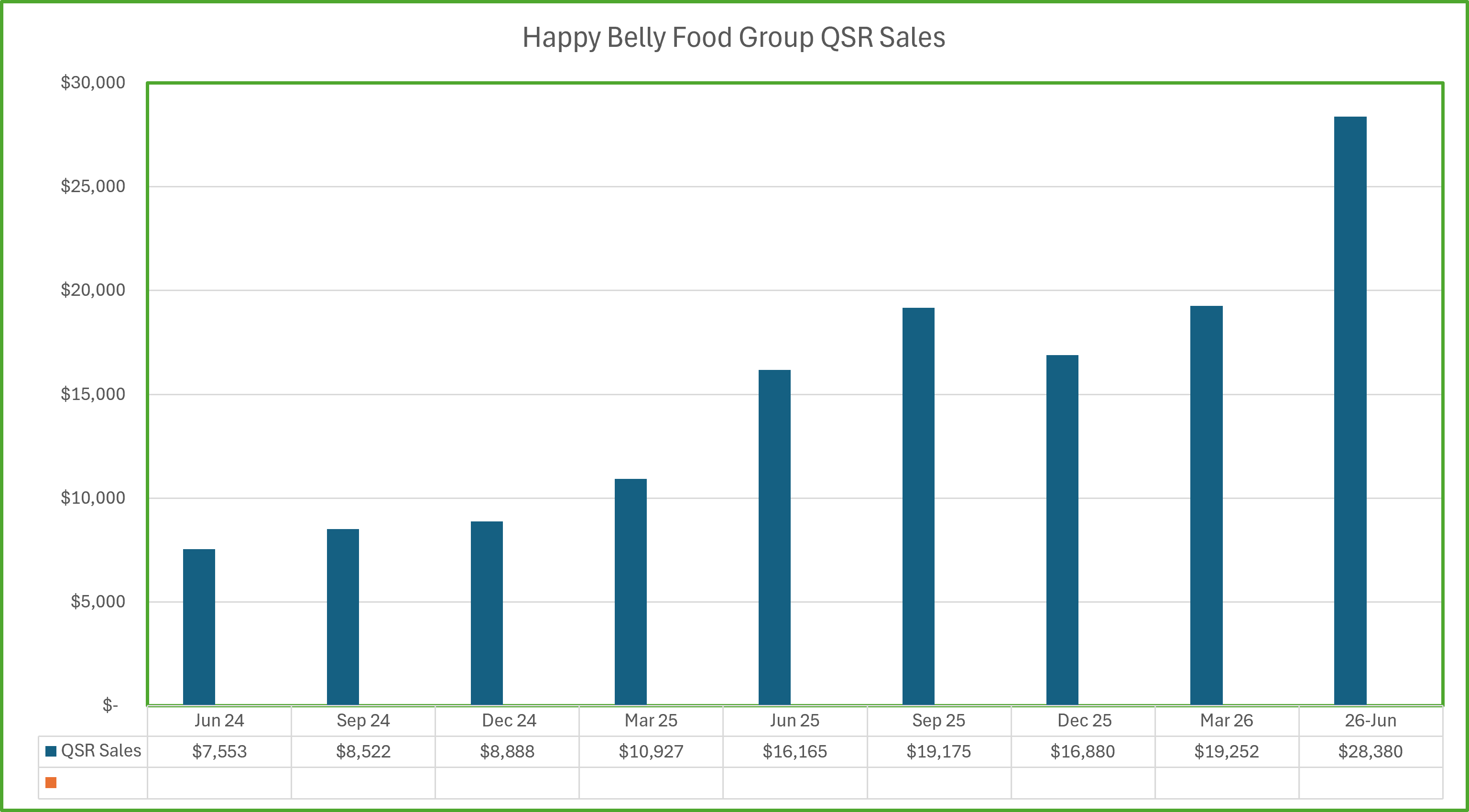
Coming into these financials I had estimated their QSR revenue to be $31.2M from 114 locations, a 63% increase over the comparable period.
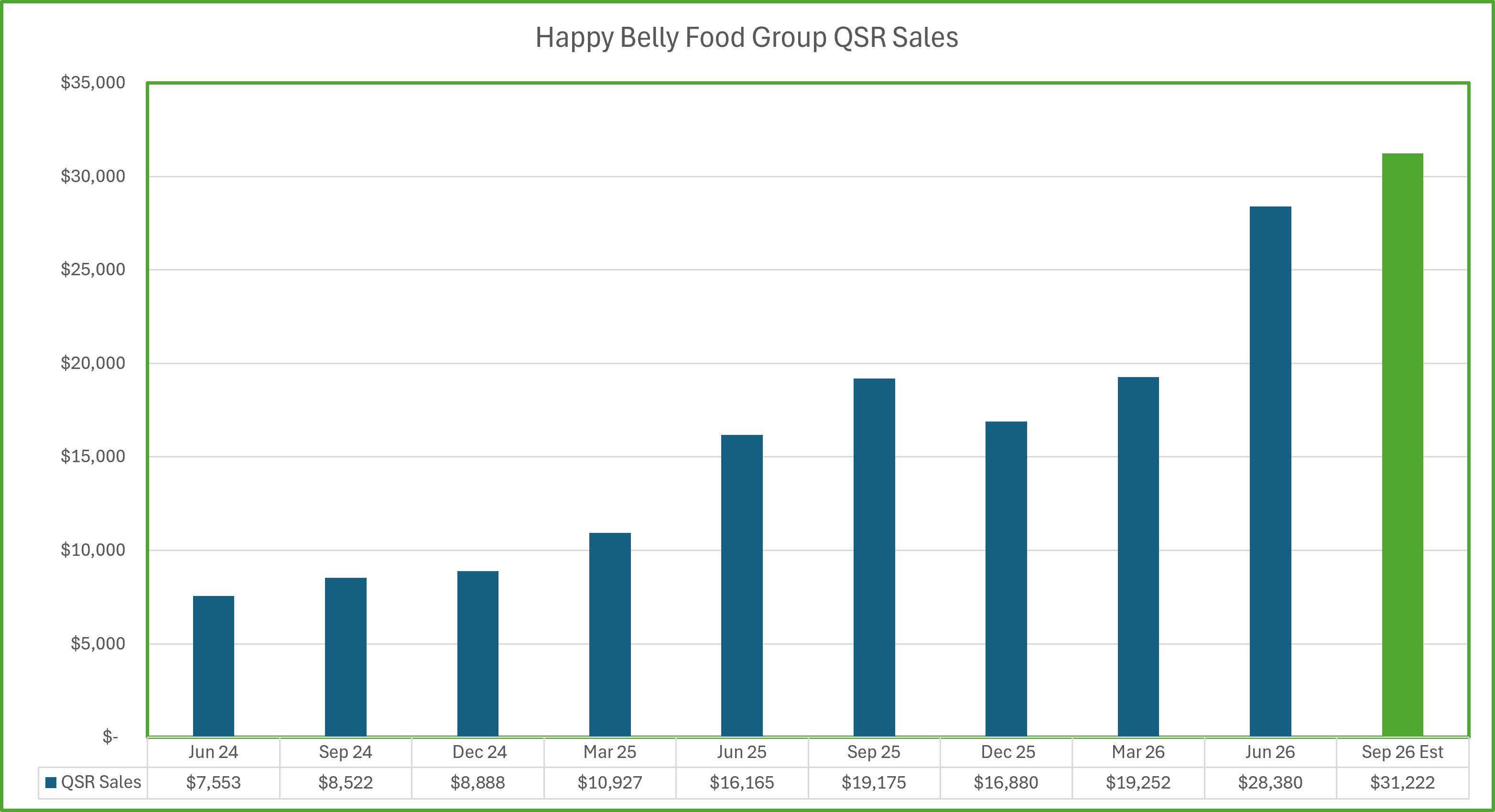
Let’s get into it and find out how they did.
The Company:
Happy Belly Food Group specializes in the growth of emerging consumer food brands, specifically in the QSR space. Their brands include Heal Wellness, Rosie’s Burgers, Yolks, Via Cibo, IQ Foods, Lettuce Love, Salus Fresh Foods, Smile Tiger Coffee, Pirho, and most recently Ghost Taco.
Click here for the company’s investor page.
Balance Sheet:
Over the past twelve months, Happy Belly has improved their current ratio from 1.1 at the end of last September, to 3.3 today (deferred revenue removed). That consists of $11.6M in cash, $3.7M of receivables, and about $700k in other short term assets over top of $4.9M in liabilities due over the next year. Liquidity is strong with their cash position alone covering short term liabilities by 2.4x.


To be frank, Happy Belly’s A/R and Q3 aging report look awful with only 44% of their total receivables listed as current and 46% sitting in 91 days past due. After already writing off $183k in receivables YTD, another $207k has been made in future provisions.
A significant portion of that (nearly $1.2M) relates back to two former insiders for options exercised that remain unpaid. This will likely be touched on a few times further into the review, but even with these amounts removed, I would still gauge this aging report as sub par.

Outside of $1.4M in convertible debentures, HBFG has no debt. These debentures convert at $0.30 in 2028 and carry a rate on the high side of 12%.
Cash Flow:
After three straight quarters of operational cash flow (OCF) declining YoY, I’m very happy to report that the company delivered in a big way generating $1.27M of OCF, 71% more than the $744k they generated last year. Now, through nine months, they have generated $1.6M of OCF up 23% from this stage in 2025.
It’s been a busy year throughout the rest of the cash flow statement as well. Within investing activities, the company disposed of their Holy Crap CPG brand earlier this year, netting them $944k, and they utilized $550k in equipment additions.
Financing activities were even busier, including a couple of important items that were reclassified from where they were previously reported. First, the company received a windfall of $9.35M into the treasury in the first six months of the year, the factor mainly responsible for their much improved balance sheet and liquidity situation.


Then note the two highlighted items from this quarter’s cash flow statement. The $1.17M directly correlates to the receivables owed on the options exercised for Delutis and Papineau.
The second highlighted item is very interesting and in my mind, more controversial. The “Costs on exercise of options and warrants” relates back to payroll taxes the company paid on behalf of insiders for the exercises of those warrants and options. The fact the company absorbed this expense on behalf of their employees itself isn’t unusual. This amount was classified as part of administrative expenses in Q2, and showed in the Q2 cash flow statement under operations. Here, those amounts are moved from operations into financing activities.
Why does this matter, you may ask? From an accounting and analyst purist point of view (Hi, that’s me), I believe it overstates their YTD operational cash flow figure rather significantly. I would argue the company’s true 9-month OCF is $932,864 rather than $1,606,872. That would show a 28% reduction in YTD OCF, rather than the 23% growth as shown.
Since it is a one time type of expense, it would be very valid to include this in your Adjusted EBITDA calculations, I’m just not so aligned with this cash flow adjustment, and I would submit wrong under IFRS rules. It’s an expense, a payroll tax and was correctly identified as such in Q2. I would not be surprised to see auditors reverse this at year end. Management has an argument to be made for the reclassification, I just don’t think it’s a very good one. If the auditors do their job, I think there is a better chance than not of this being reversed at year end.
Is it semantics? Maybe. At the end of the day it would have no impact on their Income Statement, and no impact to their overall cash balance. But the amount is significant, and key word for auditors - material as it represents 42% of their current OCF.
IAS 7, Ian. IAS 7.
I digress. The most important factor to me is the legitimacy of their Q3 OCF number, even when you back out the working capital adjustments. This is the trend I wanted to see moving into their seasonally softer quarters where producing positive OCF will be more challenging.
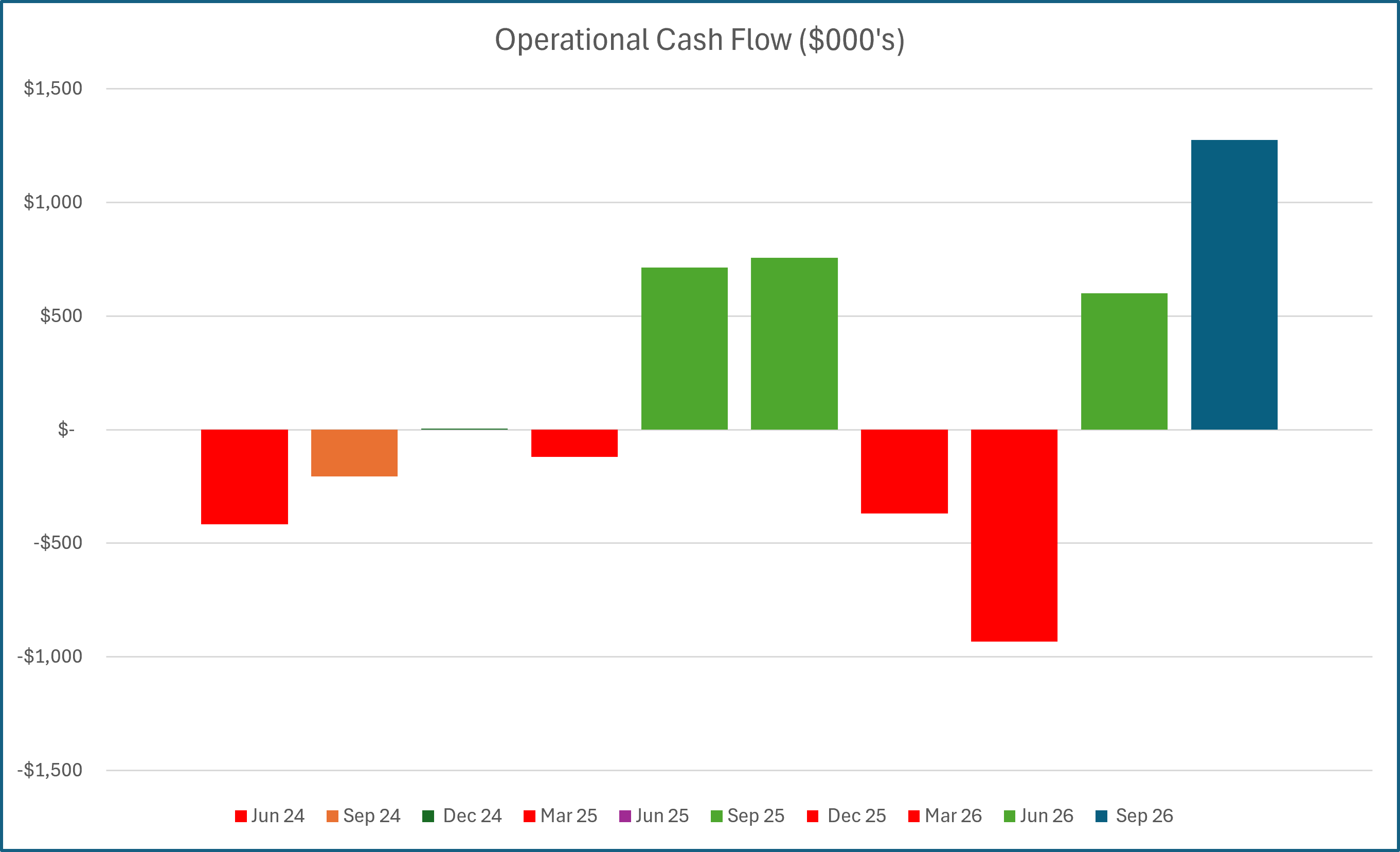
Overall, HBFG’s cash position has improved by nearly 4x since the beginning of the year from $3M to $11.6M.
Share Capital:
Not much change from last quarter so most of this is a straight cut and paste.
166.4M shares outstanding, 29% dilution over the past year with most of that occurring in the quarter
17.9M warrants outstanding, all at $2, all tied to share price performance and all expiring in Nov 2030
12.7M options, only 500k currently ITM. The remainder at $2 are similarly ones that vest upon share price conditions
12% insider ownership, 6% institutional per SimplyWallSt
Even with exercising warrants and options, the story of HBFG insiders participating in the open market has been well documented. That includes eleven buy transactions since the end of Q2
Income Statement:
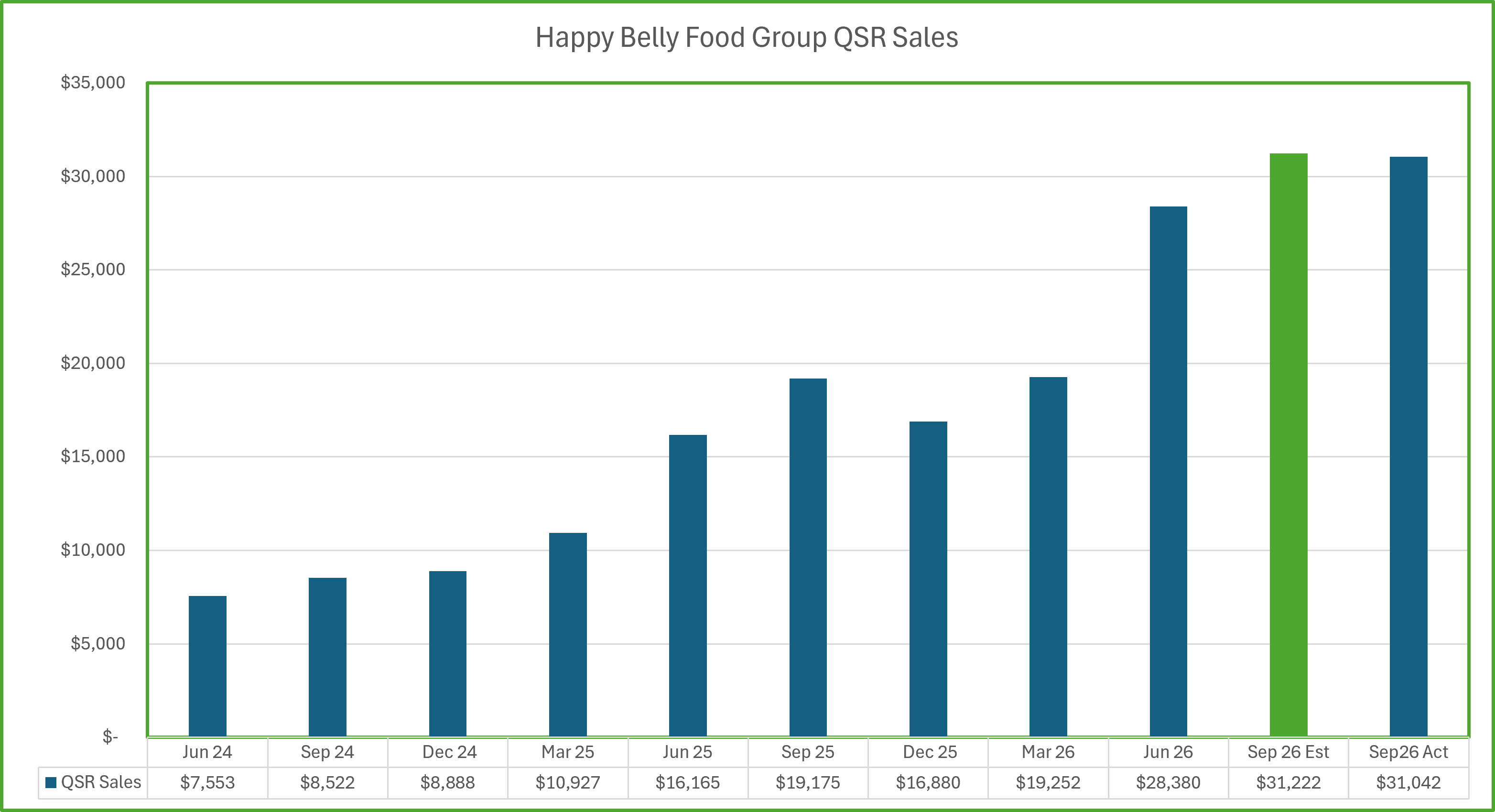
Let’s begin with QSR System sales which came in at $31M, 62% higher than the comparable period on 51% more locations. That is awfully close to my $32.2M mid point estimate, although I did have 114 locations open for the quarter vs the actual of 110 - I’ll have to reconcile that later.
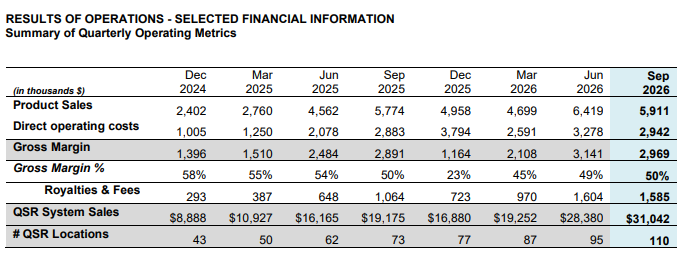
Happy Belly’s total blended revenue for the quarter was $8.2M, up 19%. Product sales which include CPG and corporately run stores were up modestly by 2.4%, while Franchise revenue grew by 49% and consulting revenue was over 8x better than last year.
Corporate locations % of total revenue decreased from 83% to 72%. This is important as this number will continue to decrease as more franchisees open.

The reason it is important is the franchising and consulting revenue is near 100% margin - you may have heard me refer to this as the “gravy” in previous reviews. Additionally, the gross margin on those product sales has come back over the 50% mark for the first time in four quarters, alleviating another concern I outlined during the introduction.
The cash burning expenses I eluded to earlier (Payroll + G&A) rose by 33%. Now on the P&L that may not sound like great operational leverage achieved, but let me try to convince you it is better than it looks and why I like to compare these expenses to QSR system sales. As more and more franchisees open, the percentage of that “gravy” with 100% margins increases - therefore that level of spending is baked against a greater gross profit pie in the future. That makes sense to me and I'm not sure I articulated that very well. But quite frankly I’m not concerned if it does to anyone else.
The key here is after four straight quarters with this metric going the wrong way, their operating expenses to total QSR system sales was the lowest in has been in the last nine quarters, down to 13.9% of QSR sales.
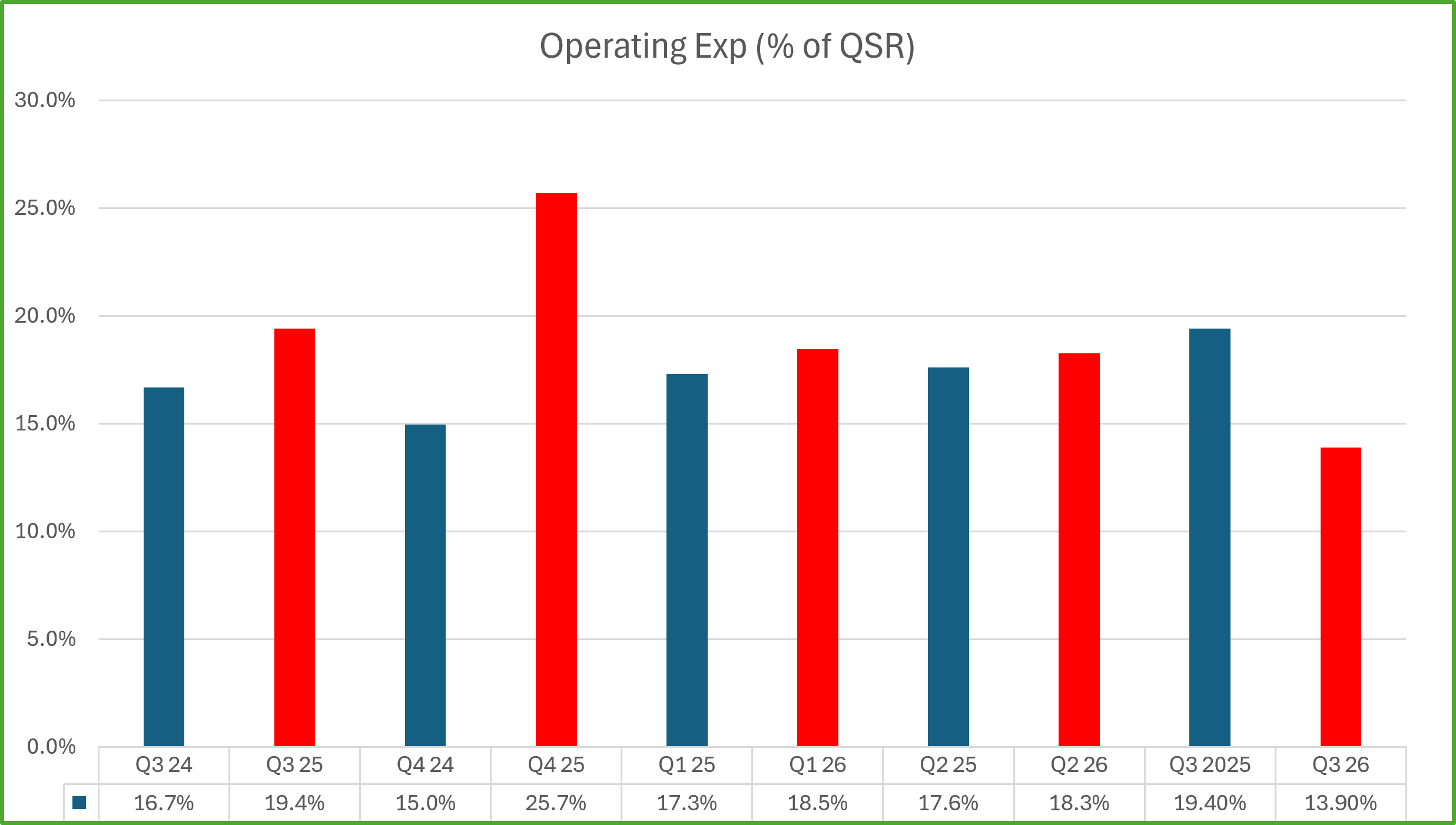
The above translates directly to the improved operational cash flow in the quarter and improved bottom line - IF it were not for that pesky eyesore of SBC expenses.
This expense relates back to what I’ll refer to as version 2.0 of the company’s unique incentive package. Version 1.0 was responsible for the dilution already discussed when the share price surpassed $2, and those security awards were exercised earlier this year.
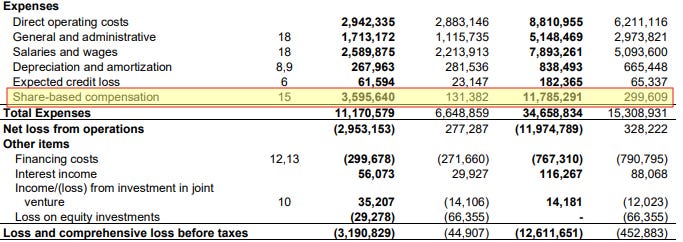
Due to IFRS rules, these expenses hit when they vest rather than when they are exercised. Since these are more front loaded and given the share price decline, I was expecting this number to be less this quarter - perhaps incorrectly.
In any event, these are non cash burning expenses and these won’t trigger as such without dramatic rises in the share price for the most part. With removing these expenses it would result in more than doubling of the operating income and result in positive net income for the quarter. Instead you will note the significant increase in their EBITDA and AEBITDA numbers and as we already witnessed, it translated very well to their quarterly cash flows.
Summary:
In the introduction, I outlined five reasons why I felt the share price had not been performing well - three of those were something that management had control in reversing. I’m happy to report that they checked off all three boxes. I’m quite happy with this, and quite frankly a little relieved too. I did not want to spend my entire review shitting on them. Don’t worry, I will still shit on them for other things before this review is complete.
But first, in addition to these being very good Q3 numbers, it was also a very newsworthy quarter for the company as well.
They closed the acquisition on their newest brand, Ghost Taco which immediately gave them 5 additional locations. Within a week of that closing, the company announced three regional area development agreements totaling 120 locations
US expansion also was prominent in the quarter. They opened their first in Lubbock, Texas. Based on what you would assume was perceived success of early returns, a 150 unit deal was signed with the Curative Group, an existing multi unit operator. Then just this week, announced their first secured real estate location in the state of Utah.

They also announced 13 other new openings for across Canada in the quarter.
Now for the shit talk.
I feel the company has had a few avoidable “own goals” in recent months. The first is the loans for shares to insiders to exercise options which is now sitting on the books for $1.2M. To be fair this figure is down $200k from last quarter suggesting some payments have been made, but I will die on the hill of stating the treasury should never be used as a bank facility for insiders, particularly when there are no stated repayment terms and interest free. I would have much rather preferred to see them sell shares via a cross trade - just as Mr. Moniz (President) did. What makes it worse is these two individuals no longer work for the company. You grant these options and incentives for retention purposes - now neither of them are still there and they sit as an uncertain receivable and the board has egg on their faces. Even if these can be clawed back if payment isn’t received, it’s just a bad look.
Next is their new 15% Omnibus plan, one year removed from shareholders approving their last one at their last annual meeting.
Adding insult to injury is the fact that the board authorized more options than they were entitled to last year, and that results in shareholders requiring a special vote later this month at their annual meeting.
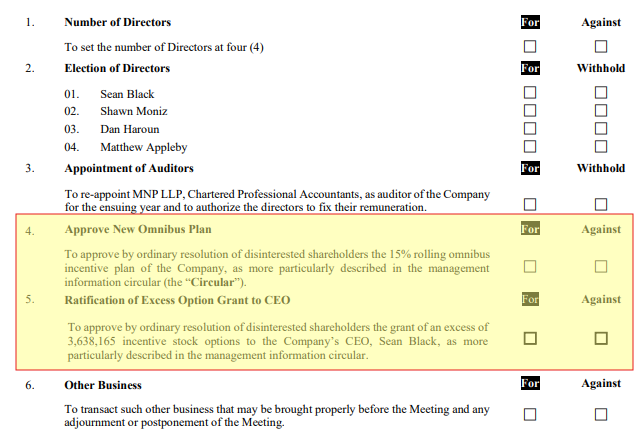
Happy Belly breached the 5% limit in their own plan by rewarding Sean Black the number of options they did. What makes it worse is that 3.6M options overage number didn’t even include the special 17.6M warrants which notably fell outside of their SBC plan. If included, it means that a total of over 30M warrants and options rewards were granted during 2025 on a float of 129M shares to begin the year. That amounts to over 23% of compensation awards during the year, and now there is an upcoming vote to reset that 15%. Now that reset is on the current float of 166M, meaning there will be another 25M options and other awards available to grant in 2027 and beyond,
This is also after 32M option and warrants were exercised this year and another 30M awarded since.
I was in favour initially as many of these awards are tied to price targets which align with retail shareholders, but this is starting to get out of hand. I’ll will not be voting for these measures, although I’m sure they will still pass. If I start seeing RSU/DSU/PSU’s being handed out in 2027, that could be a very bad trigger for me.
Lastly is some confusing organizational chart moves. I’m starting to fade after talking about the SBC, but lets just say appointing a COO and a President for your second largest brand while appointing a VP of Operations for your largest brand leaves me confused. It makes me wonder if management is rewarding loyalty over putting together a well structured organization.
That completes my balanced review.
Looking forward, and as previously stated we now get into the softer seasonally quarters and typically when the company burns cash rather than generates it. One thing I’m curious of is how the growth in Heal (relative to the rest of the brands) may exacerbate this. At the end of Q3 last year, Heal represented 37% of all stores, and today that is up to 47%. Given they are the most seasonally impacted brand, how might that negatively impact the overall Q4 and Q1 results.
To sum it up, despite my late foray into shit talk, this was an excellent quarter for Happy Belly overall. My biggest fears were quelled and I exit the Q3 review feeling better about the company as a whole than I did going in.
If I was rating the quarter alone, it’s probably worth an upgrade. The YTD numbers are still a three. I’m not about to do a 3.125 rating, so we’re leaving it at 3 and hoping for similar improvements in Q4 to upgrade them once again.
Disclaimer:
My intent is for my reviews to be a bolt on to due diligence that you have already completed. I receive dozens of review requests a week, therefore my own DD may be great or none whatsoever. Unless otherwise stated or implied, my opinions are on the financial performance of the company based on their most recent filings. I conduct these reviews to assist other retail investors whose research skills are limited when it comes to reviewing financial statements. I do not accept compensation of any kind from company’s I review.
Wolf FINS Reviews are intended to be informational and are based on personal opinion. They are not intended to be financial advice, and all readers are encouraged to perform their own due diligence prior to their investment decisions, including discussions with their investment advisor.